Proprioception and Interoception in Down syndrome - what the research tells us, and what to do about it.
Oct 01, 2026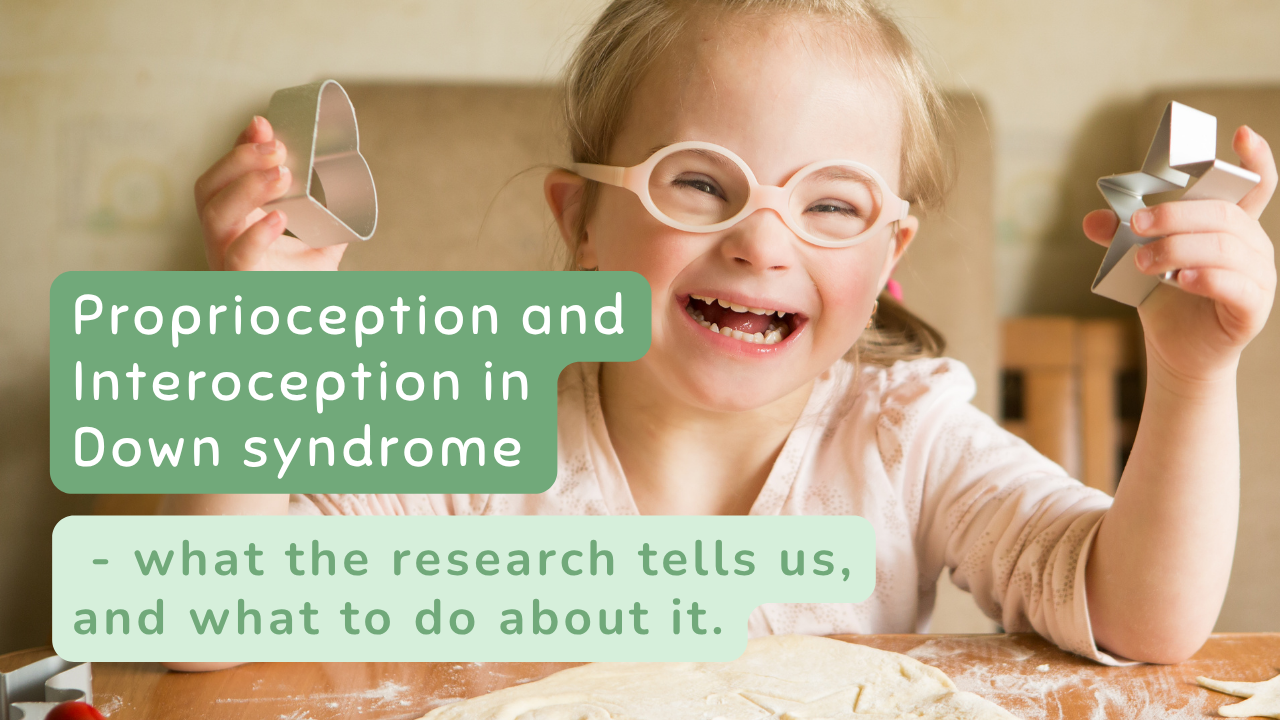
There is a word that follows many children with Down syndrome through their lives: clumsy. They trip. They lean. They bump into things and people. They crash into the sofa and ask for tight hugs and seem to have no idea where their body ends and the world begins.
What proprioception actually does and why it matters for Down Syndrome children
Proprioception is the sensory system that tells the brain where the body is, how it is moving, and how much effort is being used. It operates through receptors in muscles, joints, and connective tissue (fascia) sending a constant stream of positional data to the nervous system so we can move with accuracy and confidence.
In Down syndrome (Trisomy 21), hypotonia is present from birth. The clinical significance of hypotonia is that muscles are weaker and that reduced muscle tone means reduced proprioceptive signal. The receptors in low-tone muscles fire less consistently, sending a quieter, less reliable stream of body-position data to the brain.
Bruni et al. (2010) found that approximately 49% of children with Down syndrome have clinically significant sensory processing differences, with proprioceptive under-registration among the most consistent findings. They often seek crashing and deep pressure for the proprioceptive input that their nervous system needs but is not receiving through typical movement.
Interoception
Interoception is the sensory system that reads internal body signals. Hunger. Thirst. Temperature. Pain. Bladder fullness. The need to rest. The felt sense of emotions. When interoception is working well, a child knows when they are full, tired, cold, hurt or need to use the bathroom. When it is disrupted, those signals arrive late, unclearly, or not at all.
In Down syndrome, interoceptive differences are clinically significant across multiple domains (Mahler, 2017). Families report children who do not signal pain reliably, who cannot detect when they are wet or need the bathroom, who eat past fullness and who cannot settle to sleep despite appearing exhausted.
Nearly every area of daily occupation can be impacted, for example:
- Toileting: the child may not feel the internal signal that the bladder is full, making toileting readiness a sensory and motor challenge
- Sleep: difficulty settling is often proprioceptive and interoceptive as the nervous system cannot find stillness without adequate input
- Eating: under- or over-registering hunger and satiety signals affects nutrition, weight, and mealtime participation
- Emotional regulation: interoception helps the child link body state and emotional awareness; without it, children struggle to name or manage how they feel, which not only impacts their emotions but also their social interactions with peers
Two ideas worth trying
- Heavy work as a regulatory starting point
Before any seated, fine motor, or cognitive task, build in two to three minutes of heavy proprioceptive work. Wall push-ups, carrying a weighted bag, pushing a loaded trolley, joint compression through the shoulders, or a short obstacle course that requires crawling and climbing all load the proprioceptive system intentionally.
The effect is regulatory: a nervous system that has received clear proprioceptive input is better able to sustain attention, tolerate frustration, and engage in fine motor tasks. It is priming the sensory system for the demands that follow.
A practical note: heavy work effects are relatively short-lived (30–90 minutes in most children), so building it into the session structure or the home and school sensory diets is more effective.
- Body awareness mapping for interoception
The core idea is to teach children to notice internal body signals before asking them to act on those signals.
A starting activity: after heavy work, sit with the child and ask them to place a hand on their chest. ‘Can you feel your heart? Is it fast or slow?’ Use simple visual scales (a thermometer for energy, a traffic light for emotional state) to externalise what is happening internally.
Over time, this builds the neural pathways that connect internal sensation to conscious awareness which is the foundation for self-regulation, toileting readiness, and emotional literacy.
Start with physical sensations (heart rate, breathing, temperature) before moving to more complex emotional states.
If you work with children with Down syndrome and want to go deeper on this including the polyvagal framework, trauma-informed practice, and the full occupational picture across all eight sensory domains - The next SenseUp Masterclass covers this in full.
→ Enrol in our next Masterclass Here:
2026 Sensory Features in Diagnostic Groups: Physical Disability
References
Bruni, M., Cameron, D., Dua, S., & Noy, S. (2010). Reported sensory processing of children with Down syndrome. Physical & Occupational Therapy in Pediatrics, 30(4), 280–293.
Mahler, K. (2017). Interoception: The Eighth Sensory System. AAPC Publishing.
Pitetti, K. H., et al. (2013). Cardiorespiratory fitness and physical activity in children with Down syndrome. Adapted Physical Activity Quarterly, 30(1), 25–37.
Kerry Evetts | Occupational Therapist | Founder, SenseUp Training
Stay connected with news and updates!
Join our mailing list to receive the latest news and updates from our team.
Don't worry, your information will not be shared.
We hate SPAM. We will never sell your information, for any reason.